In just the first five months of 2026, Ho Chi Minh City recorded 747 deals of capital contribution and share purchases from foreign investors, with a total value of 2.33 billion USD. This is not a regular statistic. It is a clear signal that institutional cash flow is repositioning into the Real Estate M&A HCM before retail prices reflect it.
Contents
During the early months of 2026, the M&A market in Ho Chi Minh City (the economic hub of Vietnam) is sending a clear message: institutional capital is returning. This return is not spread thin, but it is more selective and focused than ever.
In just the first five months of 2026, Ho Chi Minh City recorded 747 transactions where foreign investors contributed capital and bought shares. The total value reached 2.33 billion USD, accounting for more than 60% of the total 3.8 billion USD of foreign capital pouring into the city (Tuoi Tre, June 2026).
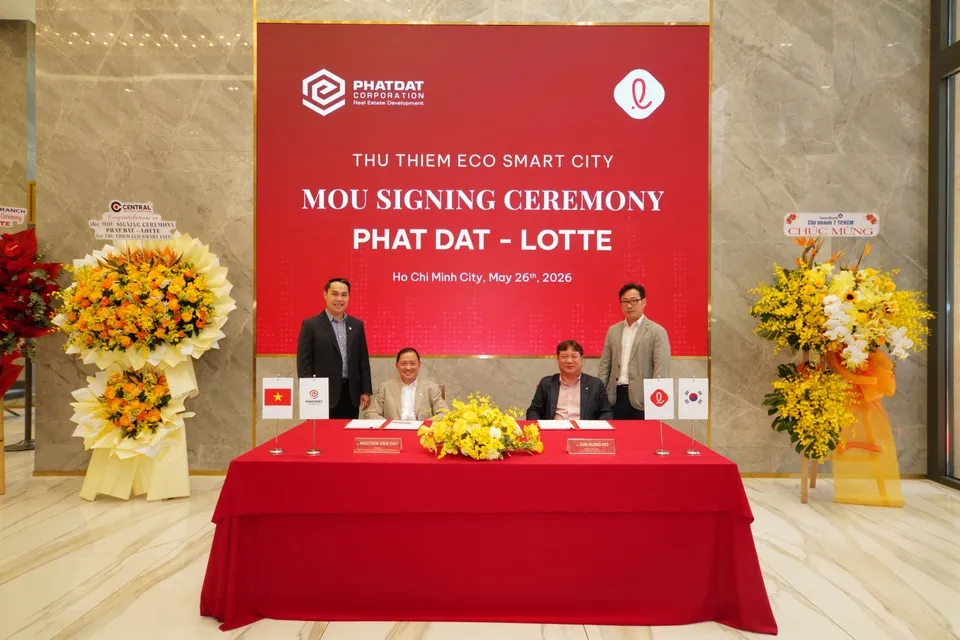
Typical transactions:
The common point of all these deals is that they are not short-term speculations. Instead, they are long-term positions in assets with a real foundation. This trend creates a strong push for Real Estate M&A HCM activities.
In the history of the real estate market, institutional capital usually moves 12 to 18 months ahead of retail prices. When investment funds and foreign corporations begin to “lock in positions,” individual investors are often still observing. This is exactly when the window of opportunity starts to shrink.
According to Mr. Ta My Bach, Capital Markets Director at JLL Vietnam, the transaction volume of real estate M&A in Vietnam has maintained a level of 1.5 – 3 billion USD per year since 2018. Experts forecast that 2026 will reach about 2.5 billion USD. For individual investors, this is not just news to read and ignore. It is a map showing where institutions are placing their bets before prices reflect that demand.
The property M&A market is not bustling by accident. At least three structural drivers are converging at the same time during this period.
First, legal bottlenecks are cleared:
Resolution 171/2024/QH15 allows the expansion of land types eligible for developing commercial housing. According to Mr. Michael Piro, CEO of Indochina Capital (February 2026), this factor directly pulls developers who were previously stuck in legal hurdles back into the market through M&A. It brings foreign capital into projects that already possess clean land funds boosting Real Estate M&A HCM activity
Second, capital costs are at a reasonable level:
Average lending interest rates currently sit at 7-9%, which is significantly lower than the 2020-2022 period. According to Mr. Piro, this interest rate level helps balance competitiveness between domestic and international investors. Furthermore, it encourages long-term capital flows rather than short-term speculation.
Third, the divestment cycle is creating new asset supply:
Investment funds that entered Vietnam during the 2017-2018 period are now entering their 7th to 10th year. This aligns perfectly with the standard divestment cycle. According to JLL, this timing creates a significant volume of assets entering the M&A market in 2026-2027, including Grade A offices, industrial real estate, and luxury complexes.
KPMG Vietnam forecasts that several deals worth 1 to 1.5 billion USD are in the final completion stages. These transactions will create a new push for the market in the coming period. Once institutions finish positioning, assets with clean legal status and strategic locations will become the scarcest and most expensive products on the retail market.
For individual investors, the key question is not whether the market is recovering. The question is: which project still have clean legal status, a strategic location, and are within reach before institutions finish positioning?