From July 1, 2026, Ho Chi Minh City is set to apply a new land price adjustment coefficient (K coefficient) under Resolution 254/2025/QH15, replacing the entire current framework. For most market participants, this reads as a technical regulatory update. For foreign investors evaluating entry timing, it signals something more specific: a structural shift in how development costs are calculated, and which assets will carry those costs going forward.
Contents
HCMC proposes applying a new coefficient 2026 starting July 1, 2026. The proposal replaces the entire current framework with a new coefficient system. This is not a standard technical change. The K coefficient serves as the direct basis to calculate land use fees, land rental, auction starting prices, and related financial obligations. It directly impacts the costs developers must bear when launching new projects.
For residential land, the coefficient applies to 168 wards, communes, and special zones across HCMC, ranging from 1 to 2.59 times, with an average around 1.35 times. The system relies on a survey of approximately 29,000 price samples across nearly 9,800 streets to closely match actual market values.
Specifically, on the three highest-priced streets in HCMC (Le Loi, Nguyen Hue, Dong Khoi), K equals 1.39 times. The resulting land price baseline for financial obligations hits around 955 million VND/m², nearly 40% higher than the current land price table.
Regarding transition regulations, applications approved or issued with financial obligation notices before the effective date continue under old rules. Applications without completed appraisals or without hired consulting units before June 30 must follow the new regulations. The HCMC land price coefficient 2026 does not change market prices directly, but it alters the legal costs developers bear, and those costs will reflect in future selling prices.
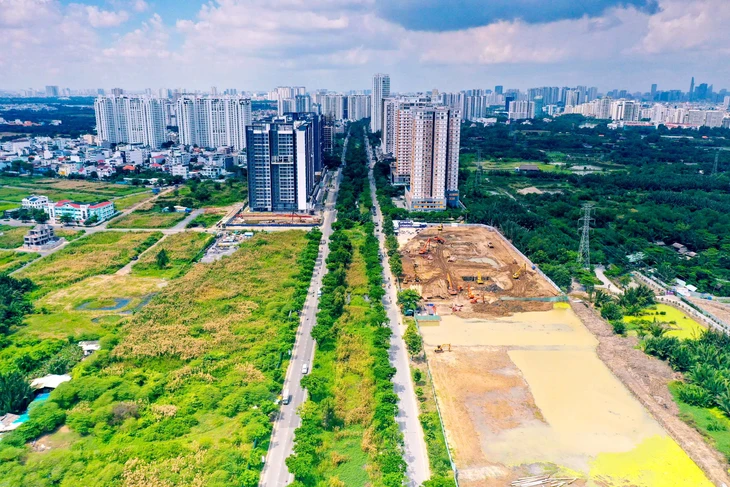
To understand how the K coefficient impacts foreign investors, look at the transmission mechanism. The K coefficient does not affect market property selling prices directly. It impacts developer project development costs, which then reflect in primary prices for future projects.
For residential land in Thu Thiem and Thao Dien — two core luxury markets in HCMC — the 2026 land price table records:
If the proposed HCMC land price coefficient 2026 is approved at an average of 1.35 times, land use fee calculation costs on these streets will rise accordingly. For example, a project at Position 1 in Thu Thiem currently calculates land use fees based on ~$11,800/m². After applying the 1.35 K coefficient, this baseline could reach nearly $15,930/m². Developers will not absorb this difference of roughly $4,130/m²; they will transfer it into the property selling prices.
For foreign investors buying assets with completed legal status before the application milestone, this extra cost does not apply. This creates a real financial advantage over new projects entering the market after the new coefficient takes effect.
When the new coefficient is approved, the market will polarize more clearly into two asset groups: projects with completed legal status before the application milestone, and new projects that must bear development costs under the new framework. For foreign investors, this is a critical boundary to understand before making a decision.
The asset group with the clearest advantage includes projects that have already been issued pink books (ownership certificates) for handed-over phases or towers. In core areas, some projects in this group include:
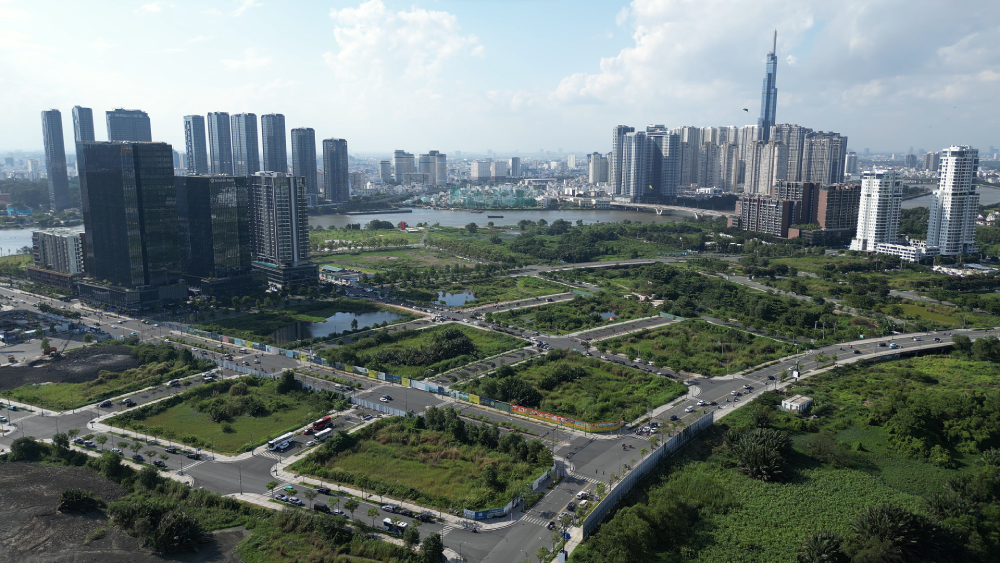
These are assets where legal costs were established under the old framework. Current buyers do not bear any extra cost differences from the new framework. Meanwhile, new projects issuing pink books after July 1, 2026, must recalculate total development costs under the adjusted framework, adding that increase directly into primary selling prices.
The K coefficient proposal is still under review but the direction is clear. When approved, development costs for new projects in key areas like Thu Thiem and Thao Dien will increase, and those costs will flow through to primary sale prices. Assets with clean legal status already issued before the new framework takes effect represent a cost baseline that the next wave of projects will find difficult to match. For foreign investors, the window between now and July 1 is not just a deadline, it is a pricing reference point.
Looking for a trustworthy real estate agent? La Quinta is your one-stop partner. We offer turnkey support for buying/selling, renting, interior design & furnishing, and full property management. Contact us today.

Mr. DONNIE KIM (Korean & English)
Associate Director
Phone number: 0898 48 38 68
Email: kdh@lqltd.com
Zalo: 0898 48 38 68 (La Quinta)
Kakaotalk ID : kdhrpm
WeChat: LQ-kdh
Whatsapp: +84 89 848 38 68

Ms. TRẦN HOÀNG OANH (Vietnamese & English)
Director of Residential and Investment Team
Phone number: (+84) 937 836 896
Email: christine@lqltd.com
Zalo: 09 3783 6896 (Oanh – Christine)
Whatsapp: +84 937 83 896
Wechat: Oanhhoangtran